
By An Aunty who lives in Hollywood
While the major studios were busy spending $200 million on superhero sequels that nobody asked for, a seventeen-year-old was quietly rendering the future of cinema in a virtual yellow-carpeted hellscape. The rise of Kane Parsons and his “Backrooms” universe isn’t just another viral fluke; it’s a clinical demonstration of how a single creator with a laptop and a vision can out-maneuver the entire Hollywood machine.
In a town—specifically the gilded, slightly panicked streets of Hollywood where everyone is one bad opening weekend away from a career in luxury real estate—the rules for success used to be set in stone. You went to USC, you interned for a man who threw staplers at you, and maybe, if you were lucky and your father owned a mid-sized airline, you got to direct a yogurt commercial.
Then came Kane Parsons.
While the industry’s heavyweights were busy debating whether their latest round of Botox had “settled” or “migrated,” this seventeen-year-old in Northern California was reinventing the entire horror genre from his bedroom. He didn’t use a Panavision camera. He used Blender. He didn’t have a craft services table with artisanal gluten-free muffins. He had, presumably, a bag of Cheetos and a vision of a yellow-carpeted hellscape.
The Yellow Wallpaper, But Make It Digital
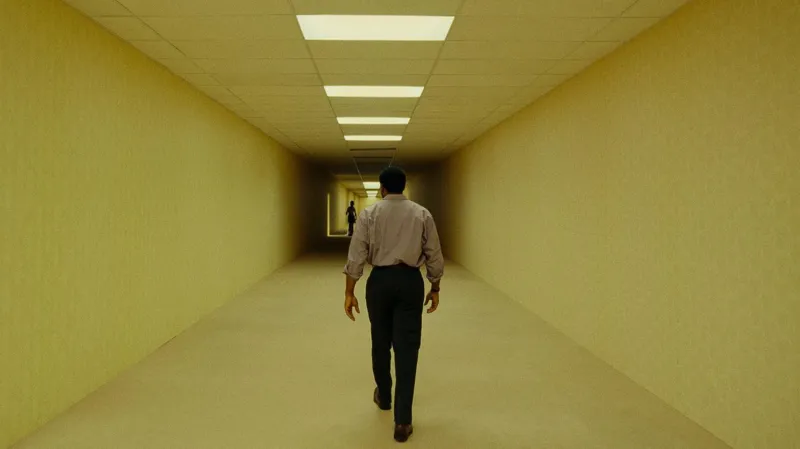
For those of you who haven’t been paying attention because you were too busy tracking the humidity levels in your wine cellar, “The Backrooms” started as a “creepypasta”—a bit of digital folklore about “noclip-ing” out of reality into a series of endless, empty office rooms. It’s the aesthetic of a dentist’s office in 1996, but if the dentist was an ancient, eldritch horror who forgot to vacuum.
Kane Parsons took this concept and turned it into “The Backrooms (Found Footage)” in early 2022. It wasn’t just scary; it was technically annoying for those of us who spent forty years learning how to light a scene. The lighting was perfect. The sound design—that low, oppressive hum of fluorescent lights—was enough to give anyone a migraine, yet it was brilliantly effective. It tapped into “liminal spaces,” those transitional areas like empty hallways or abandoned malls that make your skin crawl because they feel like they’re waiting for something to happen.
Usually, when something goes viral, the “Big Studios” swoop in, ruin the pacing, cast a TikToker who can’t act their way out of a paper bag, and the whole thing dies. But then came A24.
A24: The Only Studio That Still Uses Font Sizes Properly
A24, the studio that brought you “Midsommar” (which I personally found a bit too bright for a nap) and “Everything Everywhere All At Once,” saw what Kane was doing. Instead of saying, “Great, we’ll buy the rights and give it to a director who hasn’t worked since 2004,” they said, “Kane, darling, here is a budget. Keep doing exactly what you’re doing, but maybe with a slightly better computer.”
This was the moment the industry collectively clutched its pearls. A seventeen-year-old directing a major feature film? James Cameron was probably shaking his fist at a cloud. But here’s the informative bit, so pay attention: Kane isn’t just a “YouTube kid.” He’s a digital native who understands that the mystery is the monetization. By building a complex lore through short, cryptic videos, he created a fan base that does the marketing for him. They analyze every frame. They argue about “The Complex” like it’s the Zapruder film.
In Hollywood, we call that “unpaid labor.” Kane calls it “community building.”
Why This Actually Matters (Besides Making Us Feel Old)
The success of the Backrooms movie—which, let’s be honest, is going to make more money than several small European nations—is a signal. It’s a signal that the gatekeepers have finally lost the keys. The gate isn’t even there anymore. It’s been replaced by an open-source rendering engine.
Kane’s success is built on three things that Hollywood usually hates:
- Patience: He didn’t rush the story. He let it breathe (or choke, depending on which monster is chasing you).
- Atmosphere over Jump Scares: Anyone can have a cat jump out of a cupboard. It takes talent to make a yellow wall feel threatening.
- Visual Literacy: He understands how to use “VHS artifacts” to hide digital seams, creating a sense of “found” reality that feels more authentic than a $200 million Marvel movie.
Auntie Bev’s Closing Argument
So, what have we learned today? We’ve learned that if you want to be the next big director, you should probably stop trying to network at Soho House and start learning how to manipulate polygons. Kane Parsons is the vanguard. He’s the director who doesn’t need a permit to film on a “set” because he built the set in his mind (and his software).
The Backrooms movie isn’t just a horror film; it’s a documentary about the death of traditional cinema as we know it. And honestly? It’s about time. Cinema was getting a bit dusty anyway.
Now, if you’ll excuse me, I have to go see a man about a screenplay. It’s a liminal horror story about a woman who gets trapped in a Pilates studio that never ends. I’m calling it “The Core.”
Don’t call me, I’ll call your agent. (If they haven’t been replaced by an AI yet.)
Ciao, darlings.